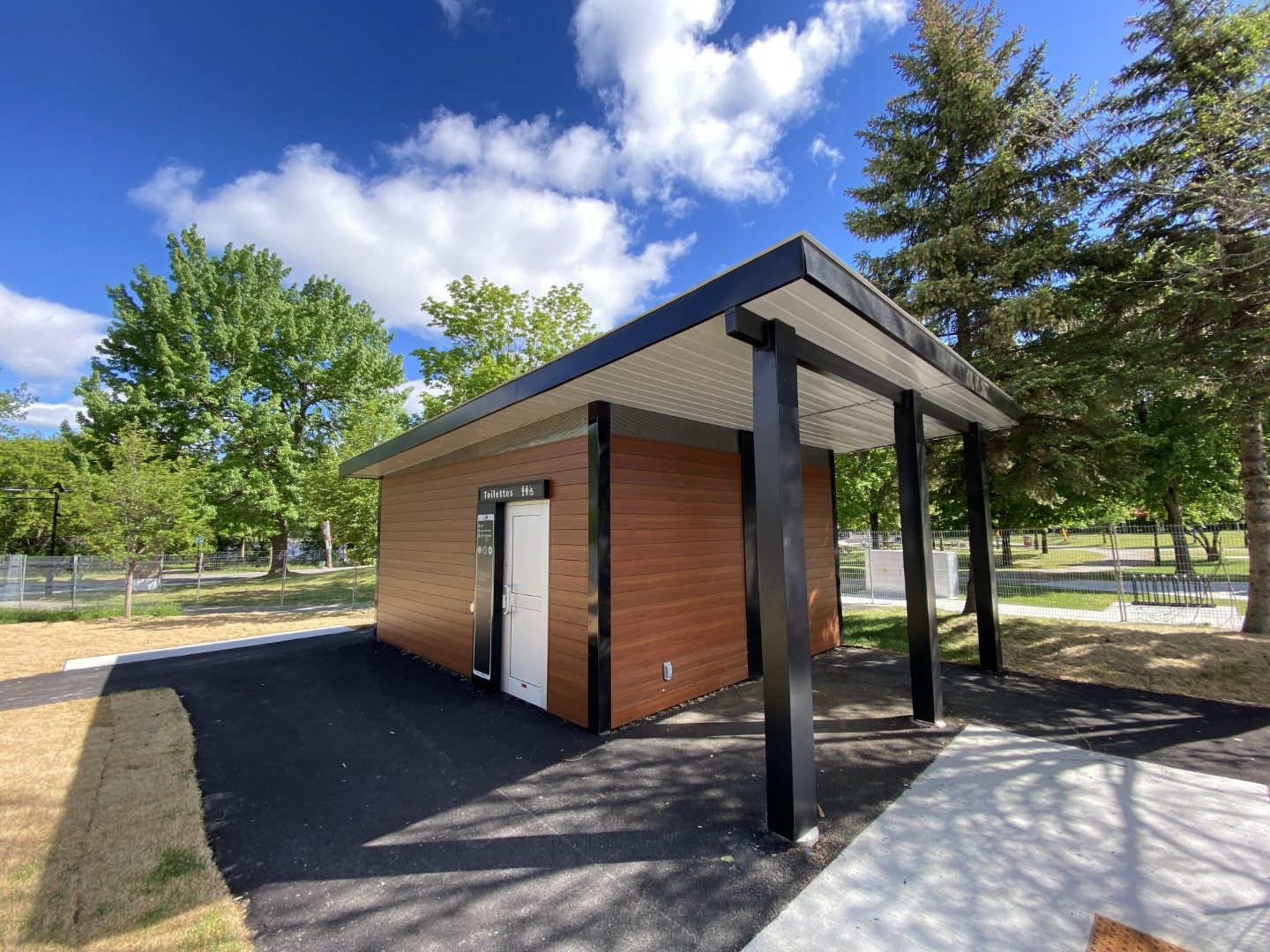
Why One Public Restroom Solution Doesn’t Fit Every Urban Context
Introduction
Across North America, cities are investing more time — and more rigor — into evaluating public restroom solutions. What’s becoming increasingly clear is that there is no single technology that works everywhere. The most effective municipalities are no longer asking “Which product is best?”, but rather “Which solution fits this specific context?”
A recent 2024 municipal evaluation highlights this shift in thinking and offers a useful framework for how cities can match public restroom technology to real-world conditions.
Context matters more than technology
Public restrooms are often discussed as a single category of infrastructure, but in reality, they operate in very different environments:
- Dense downtown cores
- Transit hubs and intermodal stations
- Waterfronts and parks
- Remote or seasonal locations
- Areas with or without access to utilities
Each of these contexts places very different demands on a restroom facility — in terms of usage intensity, maintenance, vandalism exposure, climate, and operational oversight.
Cities that fail to account for these differences often end up with restrooms that are either overbuilt, underperforming, or unsustainably expensive to operate.
How municipalities are segmenting restroom solutions
One of the most interesting developments in recent municipal studies is the explicit segmentation of restroom technologies based on site conditions.
Rather than ranking products in isolation, cities are increasingly evaluating solutions across criteria such as:
- Access to water, sewer, and electricity
- Expected daily usage and peak demand
- Exposure to vandalism and misuse
- Climate severity and year-round operation
- Long-term maintenance and operational costs
This approach recognizes an important reality:
a solution that performs well in a remote, off-grid location may not be the right fit for a high-traffic urban corridor — and vice versa.
High-traffic urban environments require a different approach
In dense urban settings where utilities are available, municipalities are prioritizing a very specific set of performance characteristics:
- Reliability under continuous, high-frequency use
- Automated cleaning to reduce manual maintenance
- Robust construction and vandal resistance
- Predictable operating costs over time
- Integration into the broader urban infrastructure network
In these environments, cities are often willing to accept a higher upfront investment if it results in better durability, hygiene, and long-term operational control.
This contrasts with off-grid or low-use locations, where autonomy and minimal infrastructure requirements may be the dominant considerations.
From product comparison to decision framework
What this evolution signals is a broader shift in how cities approach public restroom planning.
Instead of comparing products feature by feature, leading municipalities are developing decision frameworks that align technology choices with:
- Site context
- Usage patterns
- Operational capacity
- Long-term urban planning goals
This framework-based approach reduces risk, improves performance outcomes, and helps cities justify their choices to stakeholders and taxpayers alike.
A more mature conversation about public restrooms
Public restrooms are no longer being treated as temporary or secondary amenities. They are increasingly recognized as critical pieces of urban infrastructure, tied to public health, accessibility, dignity, and the overall user experience of public space.
As more cities publish detailed evaluations and implementation plans, a clearer picture is emerging:
successful public restroom programs are built on context-driven decisions, not one-size-fits-all solutions.
Looking ahead
As discussions around public restroom access accelerate in major cities, the most productive conversations will focus less on branding and more on fit, performance, and long-term outcomes.
Municipal evaluations like those published in 2024-25 provide valuable insight into how cities can move beyond trial-and-error and toward more resilient, sustainable public restroom strategies.