Why cities struggle with public restrooms… and how Urben Blu is reversing the trend
A municipal problem that has become systemic
Across most North American cities, a persistent paradox remains: citizens ask for more public restrooms, yet many municipalities choose to close them instead.
The reasons are well known—vandalism, maintenance costs, safety concerns, unsuitable equipment, labor shortages—but they are rarely analyzed in depth.
The outcome is the same everywhere:
an essential public infrastructure disappears, and the experience of parks, downtown areas, rest stops, beaches, cycling networks, and trails deteriorates as a result.
Yet another approach exists. Cities that invest in smart, robust, and secure public restrooms are seeing the trend reverse.
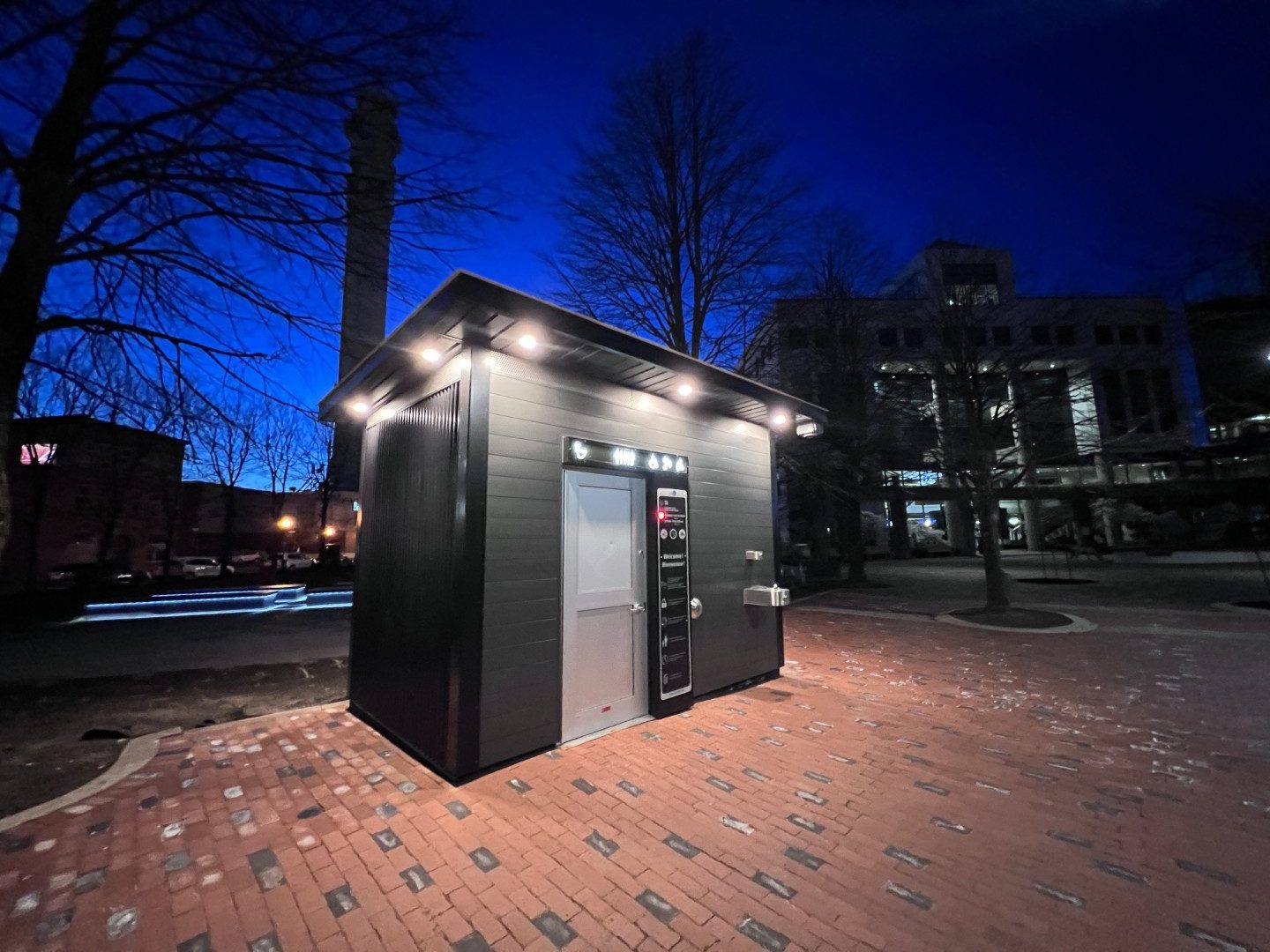
Urben Blu positions itself precisely as a solution to this recurring issue, with fully autonomous buildings, prefabricated in Québec and designed to last.
The real reasons cities close their public restrooms
1. Vandalism: the silent cost
Traditional public restrooms are often perceived as easy targets. Graffiti, broken doors, torn-out mechanisms, intentional flooding, forced locks—standard installations can require several thousand dollars per year in repairs.
In many cities, closures are not driven by a lack of need, but by the inability to continuously maintain fragile infrastructure.
2. Maintenance costs that spiral out of control
Conventional public restrooms rely heavily on manual labor:
- Constant manual cleaning
- Frequent drain unclogging
- Replacement of damaged parts
- Emergency interventions
- Temporary closures
- Monitoring and supervision
This creates a vicious cycle:
→ More issues
→ More interventions
→ Higher costs
→ Less willingness to keep the restroom open
With the ongoing shortage of municipal workers, this model quickly becomes unsustainable.
3. Safety issues and improper use
Municipalities regularly report recurring challenges:
- Loitering
- Substance use or risky behavior
- Improper use of facilities
- Citizen complaints
- Perceived lack of safety
- Police interventions
These issues often lead to permanent closures.
4. Lack of equipment designed for North American outdoor conditions
Most restroom buildings on the market are not designed for harsh climates:
- Extreme freezing temperatures
- Freeze–thaw cycles
- De-icing salts
- Rain, sand, humidity, heat
- ADA / accessibility compliance requirements
- Insufficient vandal resistance
- Inadequate insulation
- Fragile mechanical components
As a result, installations age prematurely, become costly to maintain, and are eventually removed.
How Urben Blu completely reverses the trend
Urben Blu does not simply modernize public restrooms—it completely rethinks them to withstand North American realities.
1. A 100% robust, vandal-resistant design
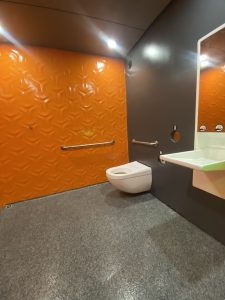
Each Urben Blu unit is manufactured at our Boisbriand facility using materials rarely found in traditional public restrooms:
Self-supporting galvanized steel structure, resistant to climate and impacts
Ultra-high-performance fiber-reinforced concrete walls and floors
All surfaces treated with anti-graffiti coating
No user-accessible moving or removable mechanisms (nothing to break)
Welded, anti-vandal stainless steel accessories
Separate, locked mechanical room
This construction dramatically reduces damage and forced closures.
2. A self-cleaning restroom
At the core of Urben Blu technology is its self-cleaning system:
- Bowl washing, disinfection, and drying after every use
- Full floor wash cycle every 10 to 15 uses
- Automatic dispensing of dedicated products (BLU Clean, descaler, disinfectant)
- Safety locking during cleaning cycles
- Automated odor control and ventilation management
- LED lighting activated only during use
Result:
- Consistent, predictable hygiene levels
- 40–60% reduction in manual cleaning
- Fewer user complaints
3. Reliable year-round operation
Unlike traditional cabins, Urben Blu restrooms remain open in winter thanks to:
- Integrated heated concrete slab
- Forced-air heating (2,500 W) plus auxiliary heater (2,000 W)
- Electric radiant floor heating (1,500 W)
- Heat recovery ventilation system (Fantech HRV, ENERGY STAR®)
- High-performance insulation (R-24.5 / R-40)
- Engineered to operate from –40°C to +40°C
Seasonal closures are eliminated.
4. A measurable reduction in municipal costs
Cities consistently observe:
- 40–60% fewer cleaning hours
- Fewer emergency interventions
- Reduced staff travel and site visits
- Lower vandalism rates
- Longer component lifespan
- Predictable maintenance (no fragile user-side mechanics)
In addition:
- Automatic email alerts (paper, soap, system anomalies)
- Remote monitoring and programming
- Cleaning cycles adjusted to usage levels
- Standard, cost-effective consumables
An Urben Blu restroom is not a cost center—it is an infrastructure asset that pays for itself over time.
Tangible impact on cities and citizens
When a public restroom remains open, clean, safe, and reliable, the benefits are immediate:
- Improved citizen experience
- Increased park and downtown usage
- Fewer complaints
- Enhanced sense of safety
- Stronger tourism appeal
- Simplified municipal operations
- Better overall quality of life
Cities such as Toronto, Montréal, Québec City, Oshawa, Moncton, Saint-Constant, and several U.S. municipalities can attest to these outcomes.
Conclusion: a structural shift
Closing public restrooms has never been a solution.
Modernizing infrastructure is.
Cities that adopt smart public restroom buildings like Urben Blu no longer react to the problem—they control it.
Urben Blu represents a new model focused on:
- Autonomy
- Robustness
- Accessibility
- Durability
- Safety
- Remote monitoring
- Ease of maintenance
…and municipalities that adopt this approach never go back.